Designed, animated and shipped by the same person
Most products pass through three pairs of hands. On GradPath and EsoLink there was nobody to hand to — so the interface, the film that explains it and the production code are all mine, and the argument about what is feasible happens in my own head instead of a comment thread.
One project, three jobs
EsoLink, start to finish — seven weeks, one person, nothing handed over.
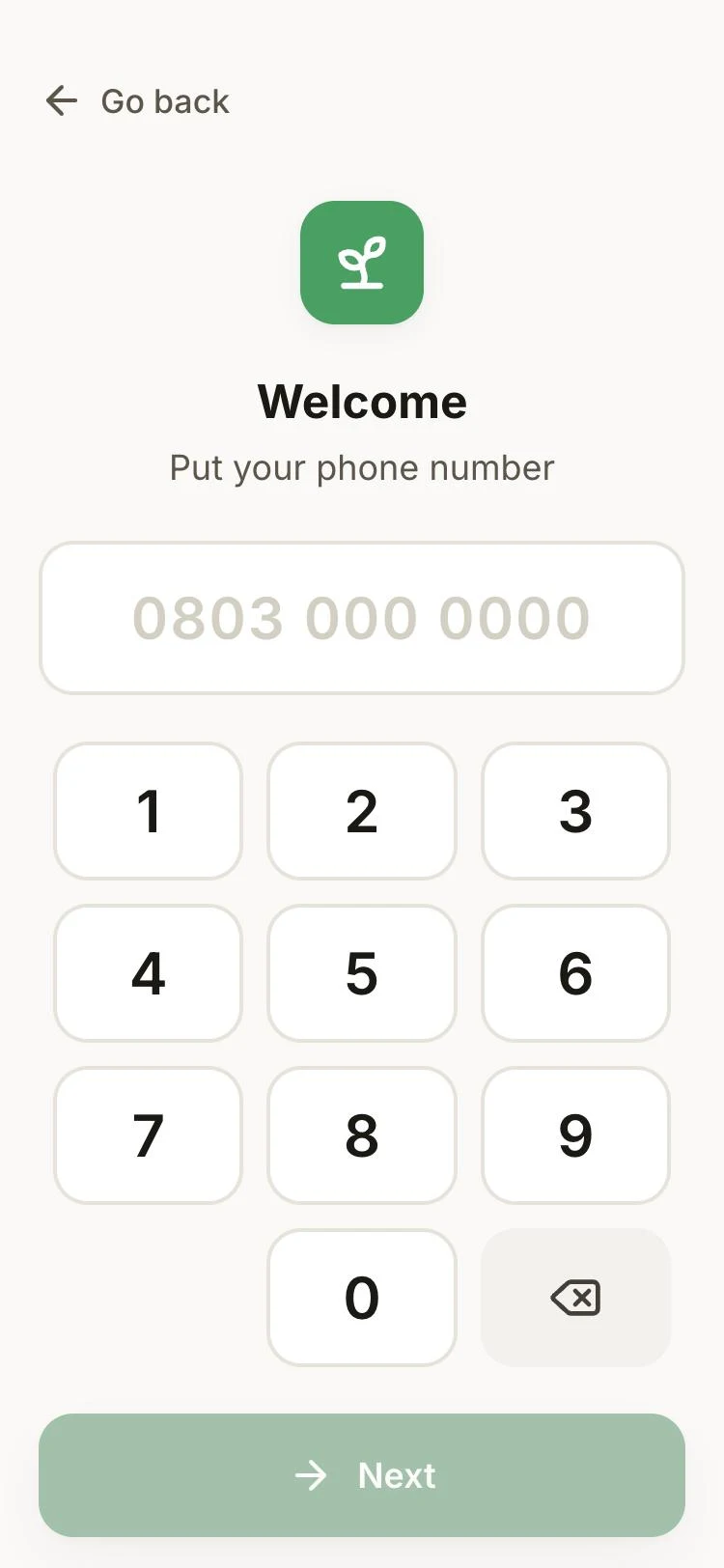
A drawn keypad instead of the system keyboard, because a farmer's phone number is their whole identity and the targets must not move under a thumb.

Aggregation is hard to say and easy to show: many small listings across many farms collapsing into one order a buyer can actually place.
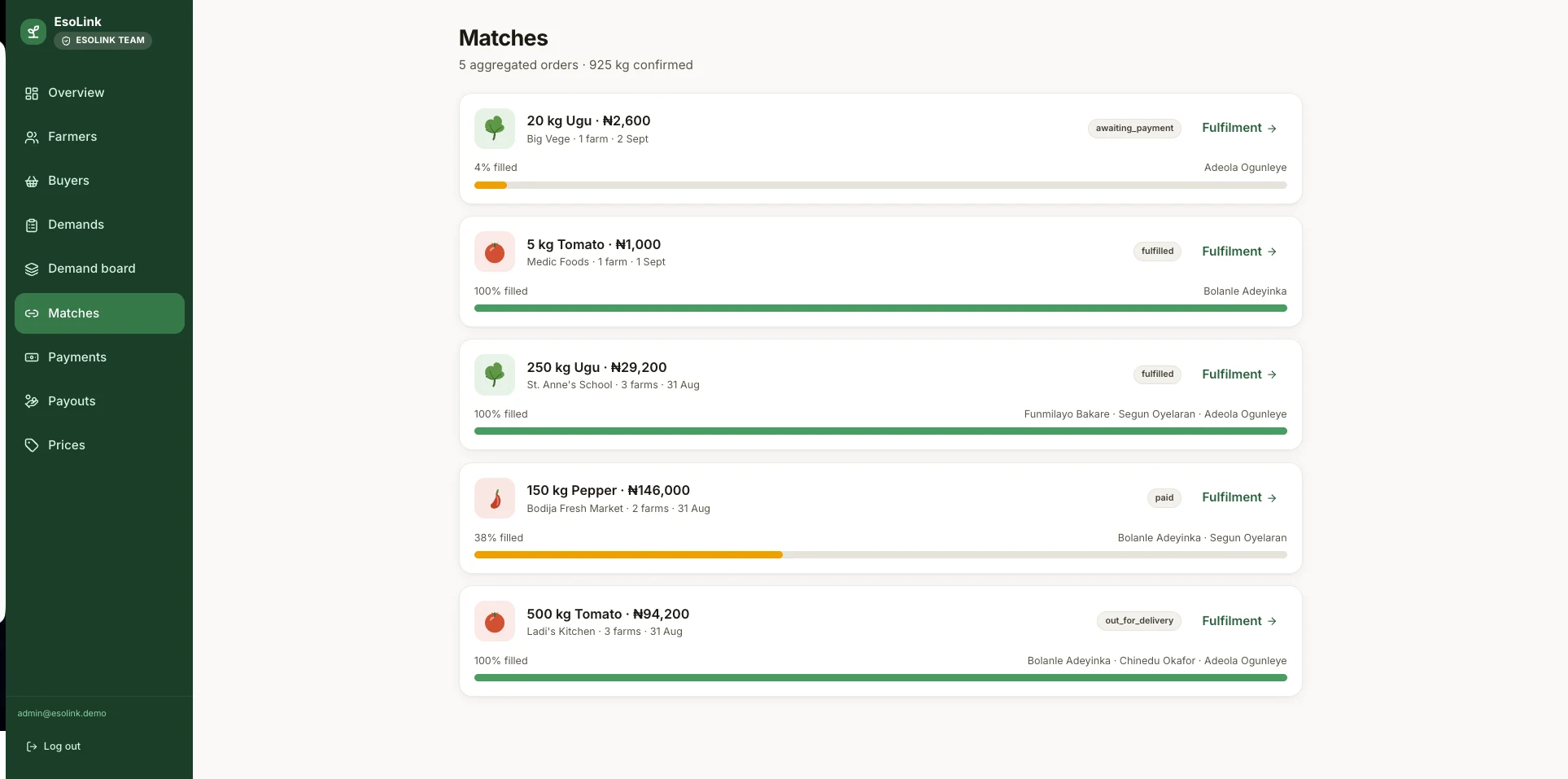
Running in production: a deterministic matcher that fills a 250 kg order from three farms and can explain the split line by line.
Three artefacts, one project, one person. The reason I keep all three is not range for its own sake — it is that the feasibility argument never has to leave the room.
Two products in production
Both founded, designed and built alone. Both have real users and a public URL.
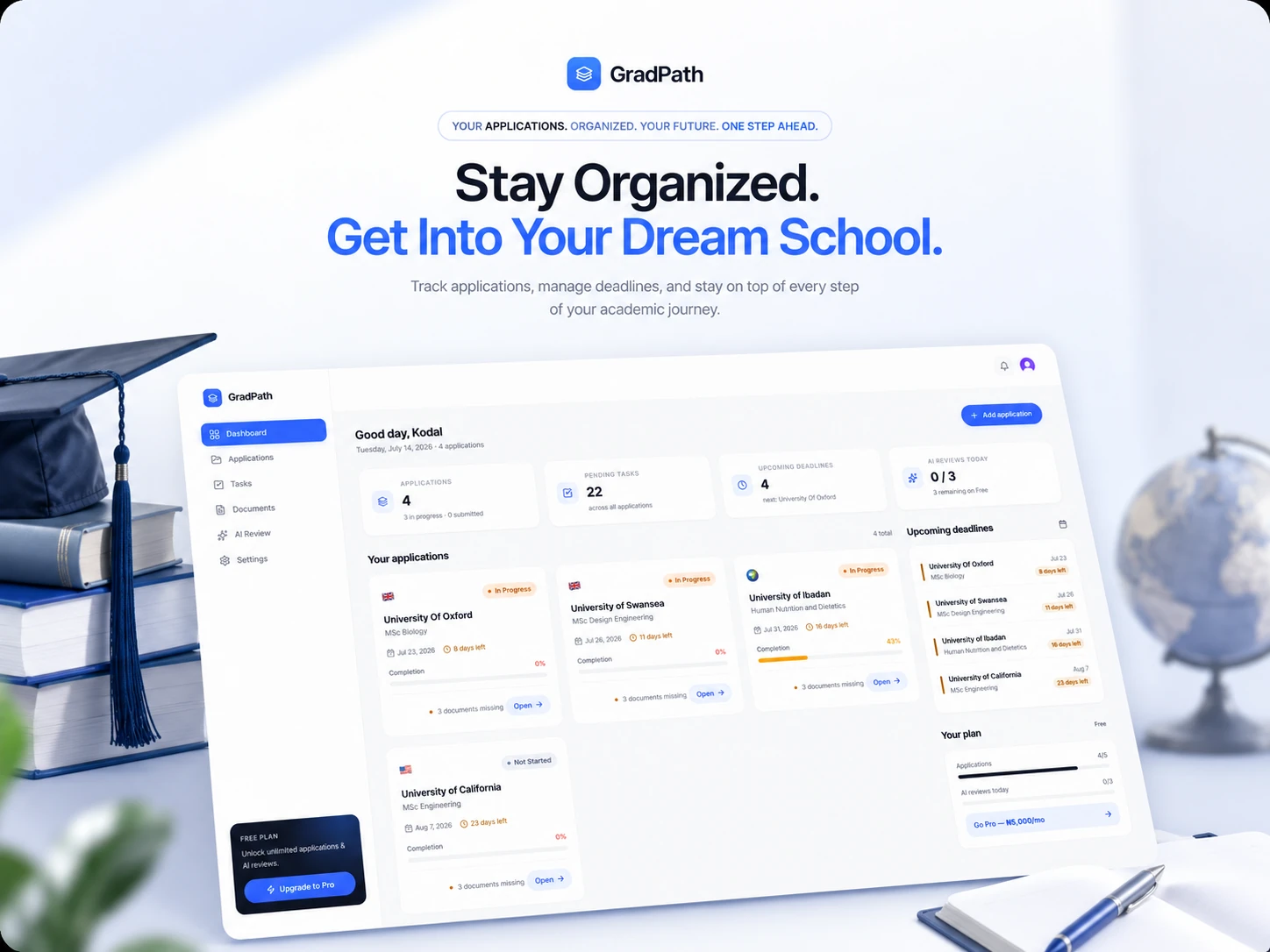
GradPath
A graduate-school application companion I founded and built end to end — research, product strategy, UX/UI and engineering.
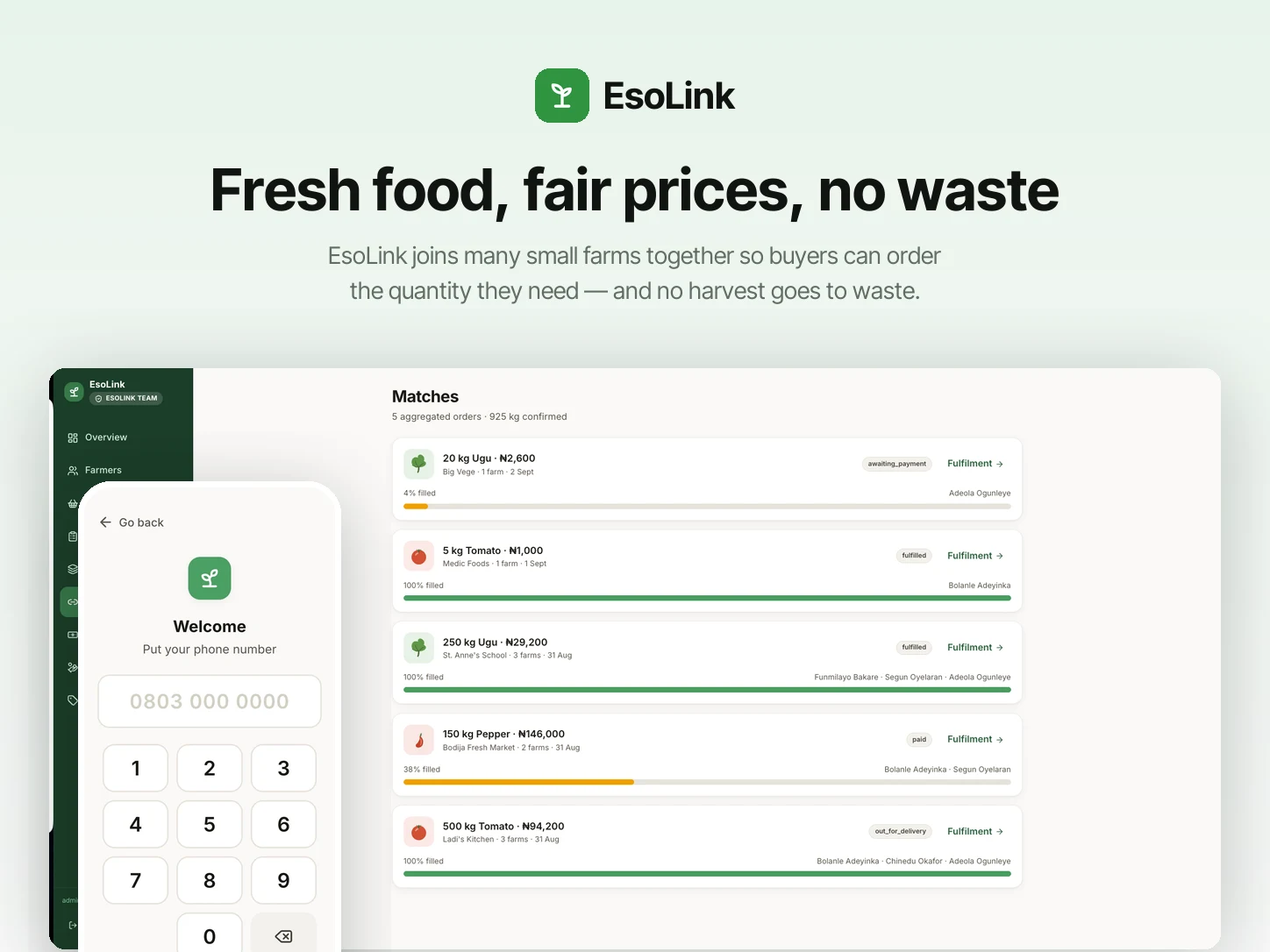
EsoLink
Joins many smallholder harvests into one wholesale order — three role apps and a matching engine I designed and built.
What building it myself changes
Feasibility stops being an argument
There is no round trip to find out whether a screen can be built. The constraint and the drawing arrive at the same time, which mostly means fewer beautiful ideas that quietly die in a ticket.
The hard parts get designed too
Matching, payouts, fulfilment discrepancies — the logic underneath the interface is where a silent mistake costs somebody money. Designing it and writing it are the same job.
Limitations get written down
EsoLink ships with a public table of every weakness and what it would take to fix. A documented cut with a named replacement is worth more than a vague claim of robustness.
Where the machine does and does not belong
I build with AI daily and I am careful about where it ends up in a product. EsoLink's matching engine is deliberately not machine learning: it filters, ranks cheapest first, allocates greedily and reports an honest shortfall. Every allocation can be read back line by line.
That matters because the incumbent in that market is a middleman nobody trusts. A system that cannot explain its own split has not replaced him — it has only made him harder to argue with. The same restraint killed a voice feature I had already built: the browser's Yorùbá recognition was not good enough, and a microphone that mishears a price is worse than no microphone.
Useful where it is accountable, absent where it would be a black box over somebody's livelihood.